Mobile Commerce Makes Local Savings Easier
In this article
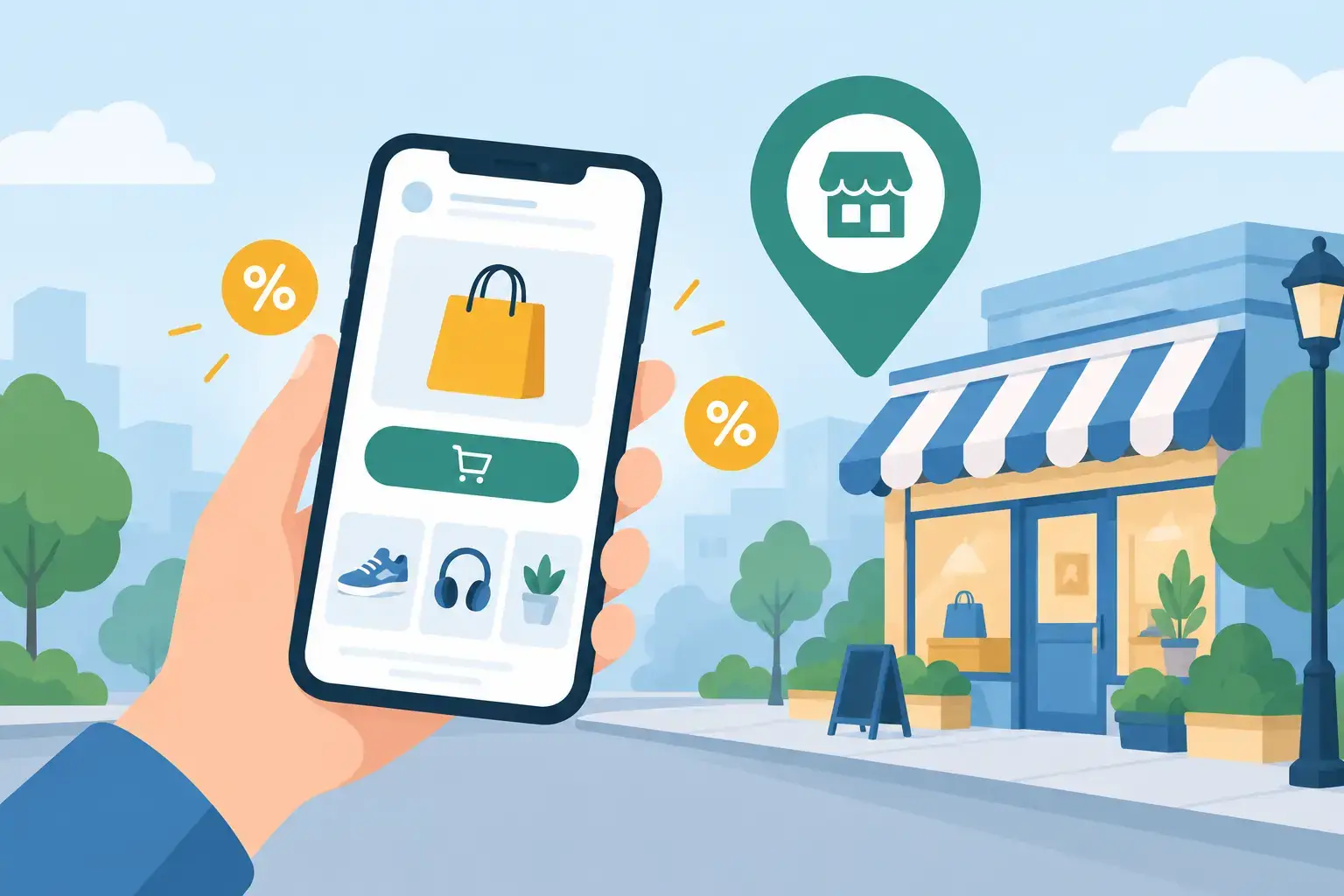
A coupon that requires printing, clipping, and remembering to bring it along is easy to leave behind. Mobile commerce changes that equation. It puts local offers, product discounts, service specials, and checkout-ready savings on the device people already carry everywhere.
For shoppers, that means less time hunting for a deal and more time using one. For local businesses, it means a practical way to get an offer in front of people who are nearby, interested, and ready to buy. No paper, no hassle, just tap and save.
What Is Mobile Commerce?
Mobile commerce, often called m-commerce, is buying, browsing, paying, and redeeming offers through a smartphone or tablet. It includes more than a mobile checkout page. Searching for a nearby oil change, claiming a restaurant special, showing a digital coupon at the register, or ordering household items for pickup all fall under the mobile commerce umbrella.
The difference is immediacy. A shopper may need groceries after work, notice a low fuel warning, or decide to book a beauty service during a lunch break. Their phone is right there. When a relevant offer is easy to find and easy to redeem, the distance between interest and action gets much shorter.
That matters for everyday spending categories, where a small discount can make a real difference over a month. Savings on auto care, electronics, groceries, appliances, travel, local retail, and personal services add up when they are available at the moment of need.
Why Shoppers Prefer Deals on Their Phones
People do not want another complicated step between finding a deal and using it. They want clear savings, simple terms, and a quick path to redemption. Mobile-first offers meet that expectation because they travel with the shopper.
A digital coupon can be searched by category, brand, or location in seconds. There is no need to sort through mailers or hold onto a paper code until it expires. If an offer is available, the shopper can pull it up at the counter or apply it during checkout.
Location also makes a major difference. A national sale may be useful, but a discount at a business close to home, work, or a regular commute has more practical value. Mobile commerce helps shoppers spot offers that fit their real plans rather than asking them to rearrange their day around a promotion.
The best experiences are direct. Shoppers should be able to see what the offer includes, whether it applies nearby, how long it lasts, and what to do next. When the details are clear, people are more likely to use the deal with confidence.
Mobile Commerce Removes Common Coupon Friction
Traditional coupons often fail for ordinary reasons: they are forgotten, misplaced, expired, or too inconvenient to use. Digital offers solve many of those problems, but only when the process stays simple.
A useful mobile deal experience should make four things easy:
- Finding offers that match what a shopper needs right now
- Checking where and when an offer can be redeemed
- Saving or accessing the coupon directly from a phone
- Showing the offer or applying it without a confusing checkout process
There is a trade-off, though. More offers do not automatically create a better experience. If a platform is crowded with irrelevant promotions, shoppers may stop looking. Local relevance, clear categories, and straightforward redemption matter more than a long list of discounts.
For shoppers, the habit is simple: check for an offer before paying full price. Whether it is a scheduled purchase like an oil change or an unplanned purchase like a last-minute gift, a quick mobile search can turn a routine expense into an easy win.
How Local Merchants Benefit From Mobile Deals
For a neighborhood business, being easy to find is only part of the challenge. The bigger question is how to give someone a reason to choose your store, service, or offer now instead of later. A targeted mobile promotion can provide that reason.
Digital coupons give merchants a flexible way to promote slow periods, introduce a new service, move seasonal inventory, or bring in first-time customers. A salon might feature a weekday special. An auto shop could promote a service package before a busy travel weekend. A local retailer may use a limited-time discount to bring attention to a new product line.
The goal is not to discount everything forever. It is to use an offer strategically. A well-built promotion has a clear value, an understandable redemption window, and a purpose behind it. For example, a merchant may accept a smaller margin on a first visit because a positive experience can lead to repeat purchases, referrals, and higher-value services later.
Mobile promotions can also be easier to adjust than print campaigns. If an offer is too broad, too narrow, or timed poorly, a merchant can refine the message for the next promotion. That flexibility is valuable for small and mid-sized businesses working with real budgets and changing demand.
Making Mobile Commerce Work for Your Budget
The most effective mobile commerce habits are not complicated. Start with the purchases you make regularly. If you already spend on groceries, car maintenance, beauty appointments, home goods, travel, or electronics, those are natural categories to check before you buy.
It also helps to think in terms of timing. A deal is only a deal if it fits something you genuinely need or planned to purchase. Buying an item just because a coupon exists can erase the savings. On the other hand, using a digital offer for a planned service or necessary household purchase keeps more money in your budget without adding extra work.
Pay attention to the details before redeeming. Check expiration dates, participating locations, exclusions, and whether the offer requires a minimum purchase. These are not reasons to avoid coupons. They are simply the steps that make sure the savings you expect are the savings you receive.
For families and commuters, keeping deals on a phone is especially useful. Plans change quickly, and time is limited. A nearby discount can help make a dinner stop, errand run, or service appointment feel more manageable without creating another task to remember.
What a Great Mobile Deal Experience Looks Like
The strongest mobile commerce experiences respect the shopper's time. They load quickly, make categories easy to browse, and keep offer details visible before someone commits. A shopper should not have to guess whether a discount is valid at a certain location or wonder what is required at checkout.
Trust matters too. Offers need to be current, easy to understand, and supported by merchants that are ready to honor them. When customers have a smooth redemption experience, they are more likely to return to both the business and the deal platform.
That is why a mobile-first coupon marketplace can be useful on both sides. Shoppers get a centralized place to look for relevant savings. Merchants get exposure to people actively searching for a reason to spend. Mobile Coupon is built around that practical exchange: local deals that are ready when customers are.
The Next Smart Purchase Could Start With a Tap
Mobile shopping is not only about ordering products from a big retailer. It is about making everyday decisions with better information and better options. A phone can help you compare, find a local business, claim a discount, and redeem it while you are already out running errands.
For merchants, the opportunity is to show up at that exact moment with an offer worth noticing. For shoppers, it is a chance to make regular purchases go further. Before your next oil change, grocery trip, appointment, or retail stop, take a moment to check what is available nearby. The best local saving is the one you can use right when you need it.
Deals you can use today
Real coupons from local stores. Free to claim.