
Why Digital Coupons Fail at the Checkout
In this article
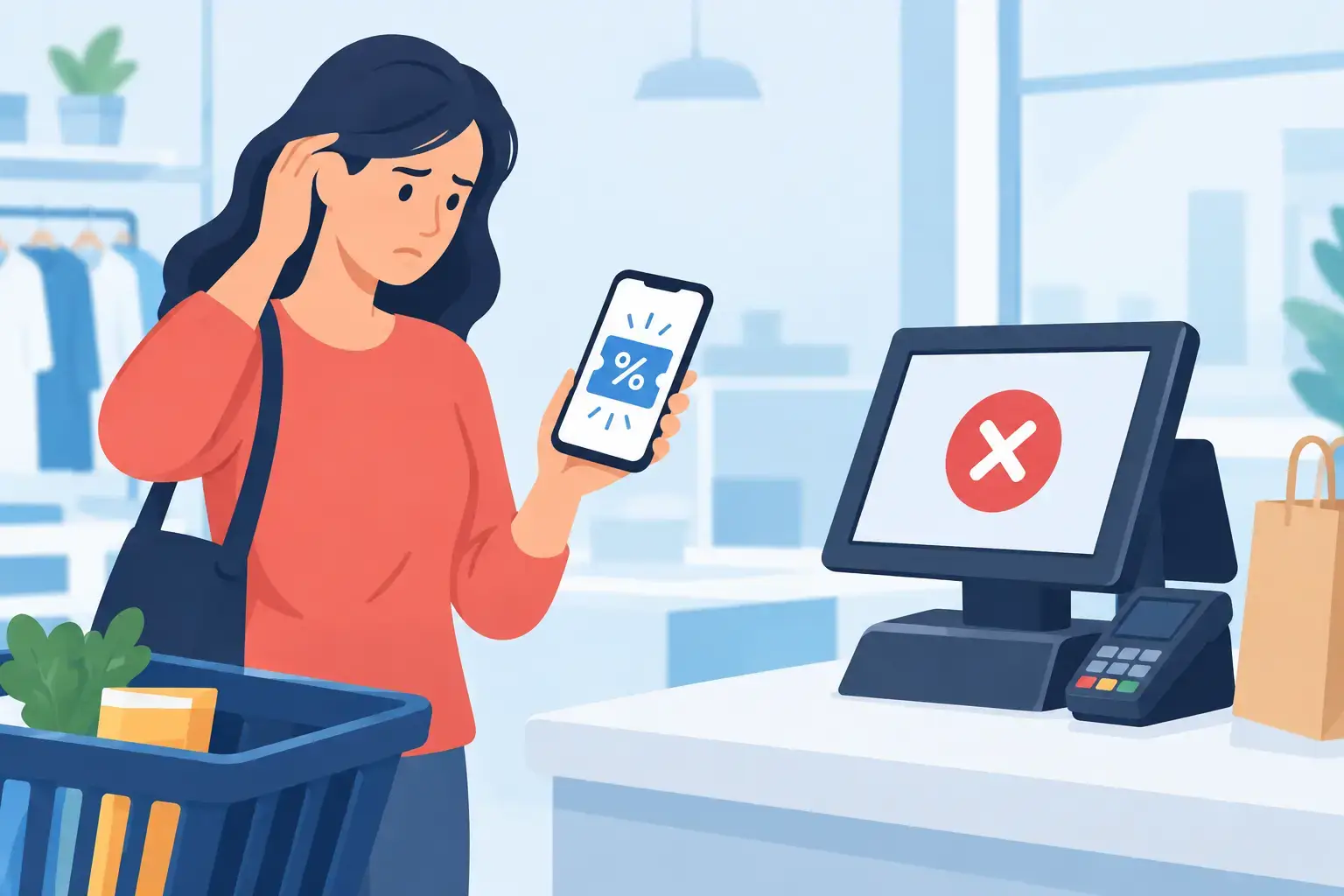
A shopper is standing at the counter with a cart full of groceries, an oil change due next week, and a coupon on their phone. Then the offer will not load, the cashier cannot find it, or the fine print says it does not apply. That quick win turns into a reason to leave. This is why digital coupons fail: not because people do not want to save, but because the experience makes saving feel like work.
For shoppers, a digital coupon has one job: help them pay less without slowing down the purchase. For merchants, it should bring in new customers or encourage a return visit without creating confusion at the register. When either side gets friction instead of value, the offer gets ignored.
Why Digital Coupons Fail Before They Are Redeemed
Most failed coupons do not fail at the moment of payment. They fail earlier, when a shopper decides an offer is too vague, too hard to use, or simply not worth remembering. A discount can look great in a headline and still produce no foot traffic if the redemption path is unclear.
The biggest problem is often a mismatch between the promise and the real-world experience. “Save 20%” gets attention. “Save 20% on select items, after 5 p.m., Monday through Thursday, with a minimum purchase, excluding sale products” gets abandoned. Restrictions sometimes protect a merchant's margins, and they can be necessary. But customers need to see them early, in plain language, before they make a trip.
The offer is not local or relevant enough
People do not open coupon apps because they want more ads. They open them because they need an affordable lunch nearby, a deal on a tire service, a discount at a beauty salon, or a simple way to lower the cost of errands already on their list.
A generic offer from across town may have value, but it rarely creates action. A timely deal from a nearby business can. Location, category, and timing work together. A commuter may care about a coffee offer at 8 a.m.; a parent may look for a grocery or family dining deal in the afternoon; a driver may search for an oil change on a weekend. The closer an offer is to a real need, the less convincing it has to do.
The savings are too small to change behavior
Not every discount has to be huge. A small offer can work well for repeat purchases, especially when it is easy to claim. But a coupon that saves a dollar while asking the customer to create an account, download an app, enter a code, and wait for approval is asking too much.
Shoppers quickly compare the savings with the effort. A strong deal feels immediate and specific: save on the service you already need, get a clear dollar amount off, or receive a useful bonus with purchase. If the value is weak, the redemption process must be almost effortless. If the process has a few steps, the value needs to feel meaningful.
Fine print arrives too late
Nothing damages trust faster than discovering exclusions at checkout. Customers may accept that certain brands, services, or peak periods are excluded. What they will not appreciate is finding out after they have selected products or booked an appointment.
Clear terms are not only a legal detail. They are part of the offer. Put the expiration date, minimum spend, participating location, and major exclusions where customers can see them before they commit. Keep the language short. “Valid at the Surrey location only. Expires June 30. Not valid with other offers.” That is easy to understand and easy for staff to honor.
The Checkout Experience Can Make or Break a Deal
Even a great local offer can fail if redemption is slow or awkward. Mobile shoppers expect a tap-and-save experience. They should not have to zoom in on a blurry image, search through a crowded inbox, or explain the coupon rules to a cashier who has never seen it.
A coupon needs a clear redemption method. Is it a code? A barcode? A button the employee verifies? A deal that is automatically applied after an online booking? Pick one method and make it obvious. If employees need special instructions, give them a simple process they can follow during a busy shift.
Merchant training matters more than many businesses expect. The staff at the register represent the offer. When they respond with uncertainty or say, “We do not take those,” the customer is unlikely to return, even if the issue gets fixed later. A short staff briefing can prevent this: where to find the offer, how to apply it, what exclusions exist, and who can help if there is a problem.
Technology also has to work under normal conditions, not just in a marketing demo. Stores have weak signals. Phones run low on battery. Customers may be in a hurry. Pages should load quickly, coupon details should be readable on a small screen, and a redeemed offer should be easy to confirm. Mobile Coupon is built around this expectation: no paper, no hassle, just a clear path from local deal discovery to redemption.
How Merchants Can Build Coupons People Actually Use
The best coupons start with a business goal, not a random discount percentage. A restaurant may want to fill slow weekday hours. An auto shop may want to introduce new customers to a higher-value service. A retailer may want to move seasonal inventory without training regular customers to wait for constant sales.
Start by defining the action you want. Then make the deal fit that action. If weekday traffic is the goal, offer a weekday-only promotion and say so. If you want to raise average order value, a minimum-spend deal can make sense. If you want new customers, make the first visit feel low-risk and valuable.
Avoid stacking too many conditions. The offer should answer four questions in seconds: what do I get, what do I need to buy, where can I use it, and when does it end? When those answers are visible, shoppers are more likely to save the deal and follow through.
There is also a margin trade-off. Deep discounts may generate attention, but they can attract one-time bargain hunters who never return. Smaller, targeted offers may bring fewer redemptions but better customers. A salon might offer a new-client service upgrade rather than a steep discount on every appointment. A local retailer might provide a bonus item after a reasonable spend. The right choice depends on capacity, margins, and what a repeat customer is worth.
Measure redemptions, not just clicks
A coupon with plenty of views can still be a poor campaign. Views tell you the headline attracted attention. Redemptions tell you whether the offer worked in the real world. Merchants should also watch for repeat visits, average purchase value, popular redemption times, and customer questions at checkout.
If an offer gets clicks but few redemptions, the issue may be the terms, location, expiration date, or mobile experience. If it gets redemptions but little profit, the offer may be too broad or too generous. Small adjustments can make a large difference. Test a clearer headline, a shorter redemption window, a better-value bundle, or a location-specific offer rather than assuming coupons themselves do not work.
What Shoppers Should Look for Before Saving a Deal
A good coupon should feel useful before you claim it. Check that the business is nearby, the expiration date fits your plans, and the discount applies to something you would genuinely buy. Saving money on an unnecessary purchase is not really saving.
It also helps to keep coupons organized around routine spending. Look for deals on groceries, household needs, travel, services, dining, and local shopping you already expect to do. The most valuable offer is often not the flashiest one. It is the one that reduces a bill already coming your way.
If a deal seems confusing, ask before you spend. A quick call to the business or a look at the terms can prevent an uncomfortable checkout conversation. Good merchants welcome the question because they want the offer to work for both sides.
Digital coupons succeed when they respect a customer's time and a merchant's bottom line. Make the savings real, the rules clear, and the redemption fast. Then the next time a shopper pulls out their phone at checkout, the deal feels less like a gamble and more like the easy win it was meant to be.
Deals you can use today
Real coupons from local stores. Free to claim.