Hyperlocal Marketing That Brings Nearby Shoppers
In this article
A shopper searches for an oil change during lunch, checks their phone while standing near a salon, or looks for a grocery deal before heading home. That is where hyperlocal marketing earns its keep. It puts a relevant offer in front of people who are close enough, ready enough, and motivated enough to act now.
For local businesses, broad awareness is useful, but it does not always fill a table, book an appointment, or move inventory this week. A nearby customer with a clear need is far more valuable than thousands of people who will never visit. Hyperlocal marketing helps close that gap with location-relevant messaging, mobile-friendly deals, and a simple path from discovery to redemption.
What Is Hyperlocal Marketing?
Hyperlocal marketing targets people within a specific geographic area, often a city, neighborhood, postal code, or radius around a business. Instead of promoting the same message to an entire region, a business can show shoppers an offer that matches where they are and what they may need nearby.
Think of a tire shop offering a weekday discount to drivers within a few miles, a coffee shop promoting an afternoon special to nearby office workers, or a beauty salon sharing last-minute appointment savings with people in the neighborhood. The goal is not just to be seen. The goal is to give local shoppers a reason to choose your business right now.
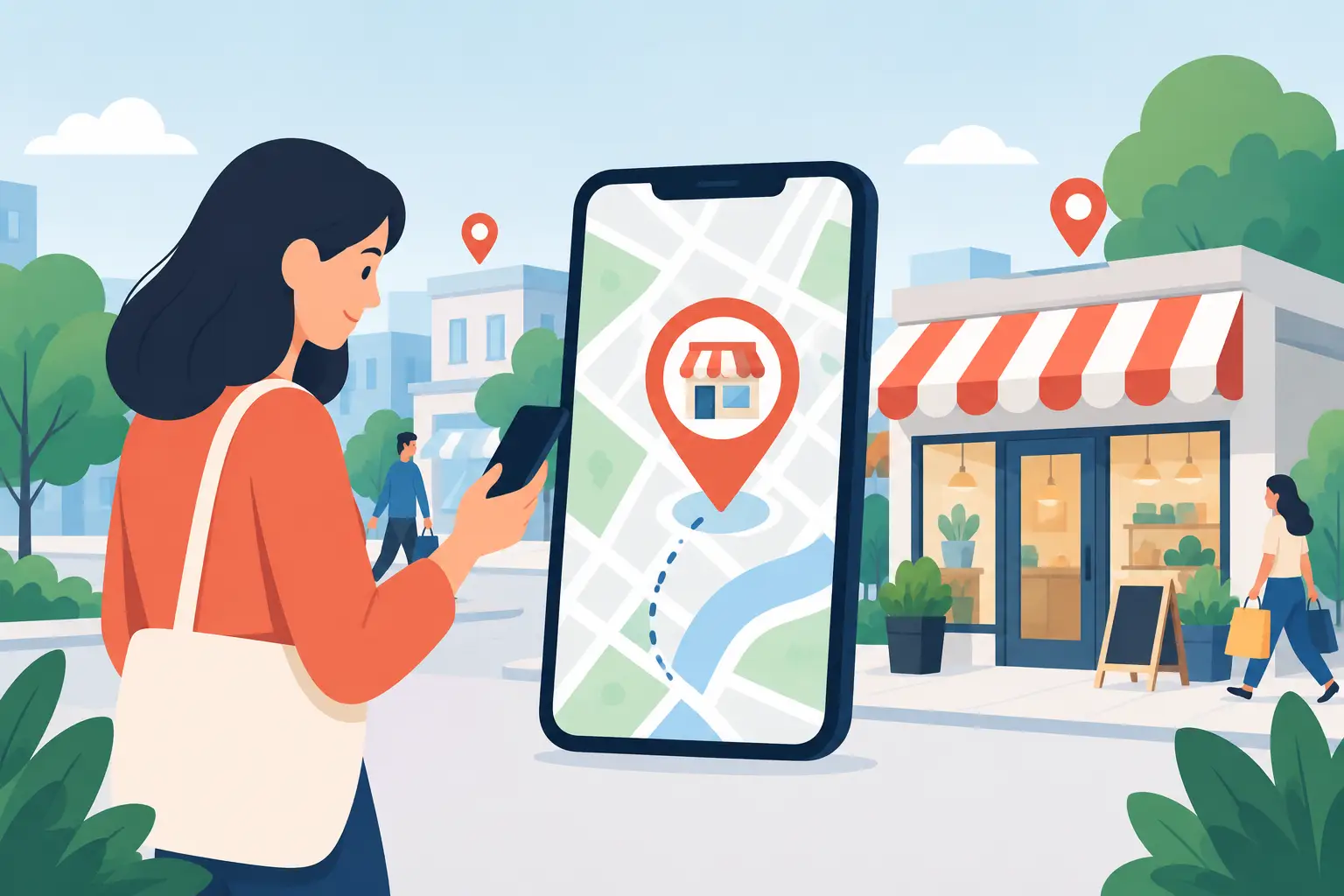
This approach works especially well on mobile. Phones travel with customers, and customers use them to compare prices, search local services, browse deals, and make fast decisions. A digital coupon that can be opened and redeemed from a phone removes the old friction of printing, clipping, and remembering a paper offer.
Why Nearby Offers Convert Better
Local shoppers are often dealing with immediate needs. They need an appliance repaired, a quick lunch, a haircut, a car service, or a deal on something already on their list. When a relevant offer appears at the moment they are looking, the decision becomes easier.
That is the advantage of proximity combined with value. A 10% discount may not change behavior for someone across the state. For someone two blocks away who is already comparing options, it can be the final nudge that brings them through the door.
Hyperlocal campaigns also make marketing budgets work harder. A neighborhood restaurant does not need to pay for attention from people who live too far away to visit regularly. A local retailer does not need a vague message aimed at everyone. It needs the right message in the right area, supported by an offer that is easy to understand and easy to use.
For shoppers, the benefit is just as clear: less searching, faster savings, and deals that fit real life. No paper, no hassle, just tap and save.
How to Build a Hyperlocal Marketing Campaign
Start with the action you want nearby shoppers to take. That may be visiting a store, booking a service, trying a new menu item, calling for an estimate, or redeeming a limited-time coupon. One campaign should have one primary goal. When the goal is fuzzy, the offer and message usually become fuzzy too.
Define the area that can realistically produce customers
Your target area should reflect how people actually shop. A downtown lunch spot may focus on a few surrounding blocks. An auto repair business might draw customers from several nearby suburbs. A specialty retailer may have a larger service area because customers are willing to drive farther for the right product.
There is no universal radius that works for every business. Convenience, price point, competition, parking, transit access, and urgency all matter. A great deal will not overcome an unrealistic travel distance for a routine purchase.
Create one offer people can understand in seconds
The strongest local promotions are specific. “Save on services” is less compelling than “$20 off a synthetic oil change.” “Great beauty deals” is weaker than “Save 25% on a weekday facial.” Customers should know what they get, what it costs, and when they can use it without reading fine print for five minutes.
A good offer does not always mean the deepest discount. It can be a bundled service, a free add-on, a first-visit incentive, or a time-based special that fills slower hours. The trade-off is margin. If a promotion attracts customers but loses money on every redemption, it is not a growth strategy. Build in a reason for customers to return, upgrade, or explore higher-value products.
Make mobile redemption effortless
Every extra step can cost a sale. If people must print a coupon, create a complicated account, or call to verify a deal, many will leave before taking action. Mobile-first offers should be easy to find, easy to show, and easy for staff to recognize.
This is where a local deals platform can help. Mobile Coupon gives merchants a way to feature promotions in front of deal-seeking local shoppers while giving customers instant access to offers from their phones. The experience should feel fast from both sides: shoppers find a deal, merchants welcome them in, and redemption happens without a paper trail.
Match timing to customer behavior
Timing can turn an ordinary promotion into a useful one. A restaurant may promote lunch savings before noon. A salon may feature open appointment slots on quieter weekdays. A local retailer can create a weekend offer when families are already running errands.
Urgency works when it is real. Limited-time deals, same-day specials, and seasonal promotions can encourage action, but only if the deadline is clear and the offer delivers genuine value. Constant “last chance” messaging eventually gets ignored.
Local Data Makes the Difference
Hyperlocal marketing is not guesswork, even when the campaign is simple. Merchants should track which offers are redeemed, when customers arrive, which categories generate the most interest, and whether new customers return.
Start with a few practical questions. Which service has unused capacity? Which product needs a push? What days or hours are slow? Which customer group is most likely to respond to a deal? The answers help shape an offer that solves a real business problem instead of simply discounting at random.
Pay attention to the full customer journey, too. A promotion may drive clicks but few redemptions if the offer is confusing. It may produce redemptions but low repeat visits if the in-store experience disappoints. The numbers tell you where to look, but staff service, inventory, and clear communication determine whether a first visit becomes a habit.
Common Mistakes That Waste Local Demand
The first mistake is targeting too broadly. A campaign aimed at an entire metro area may generate attention, but much of that attention may never convert. Begin close to your business and expand only when the data shows demand beyond your core area.
The second is making the deal too complicated. If customers need to decode exclusions, calculate savings, or wonder whether they qualify, they may choose a competitor with a clearer offer. Keep terms fair and visible, especially expiration dates and any purchase requirements.
The third is failing to prepare the team. Your staff should know the promotion, how to redeem it, and how to answer basic questions. A smooth welcome reinforces the value of the deal. Confusion at checkout can turn a money-saving moment into a bad review.
Finally, do not treat a coupon as the entire strategy. The offer gets a shopper in the door. Product quality, helpful service, follow-up, and a reason to return are what build customer value over time.
Make Every Local Promotion Easy to Act On
The best hyperlocal marketing feels useful rather than intrusive. It meets shoppers where they already are, gives them a clear reason to choose a nearby business, and makes the next step simple. For merchants, that means focusing less on empty reach and more on real local action.
Start with one strong offer for one clear audience in one practical area. Watch what happens, refine the message, and keep redemption simple. When a nearby shopper is ready to save, being easy to find can be the difference between another scroll and a new customer.
Put these ideas to work on Mobile Coupon
Post a deal in minutes. Shoppers near your store see it in the app and on mobilecoupon.ca, and your followers get a notification.
List your business