Digital Vouchers Versus Promo Codes Compared
In this article
You are checking out after an oil change, picking up groceries, or booking a salon appointment. A discount appears on your phone, but is it a voucher or a promo code? In the digital vouchers versus promo codes conversation, the difference matters because it affects how quickly you save, what you need to do at checkout, and whether the offer works at the location you want.
Both are designed to make savings easy. But they are not interchangeable. One usually acts like a ready-to-redeem offer tied to a specific deal, while the other is a short code you enter to trigger a discount. Knowing which one you have helps you avoid missed savings and choose offers that fit the way you shop.
Digital Vouchers Versus Promo Codes: The Core Difference
A digital voucher is an electronic offer that gives you a defined benefit. It may provide a dollar amount off, a percentage discount, a free add-on, a prepaid value, or access to a special price. You typically claim the voucher through an app, email, text message, or digital coupon dashboard, then show it from your phone when you are ready to redeem.
For example, a local auto shop may offer a digital voucher for $20 off an oil change. You claim it before you arrive, pull it up at the counter, and the business verifies it. The offer is usually connected to a specific merchant, service, location, expiration date, and set of terms.
A promo code is a string of letters, numbers, or both. You type or paste it into a promo-code field during online checkout, in an app, or sometimes into a merchant's ordering system. A code such as SAVE15 may apply 15% off a purchase, free delivery, or another advertised perk.
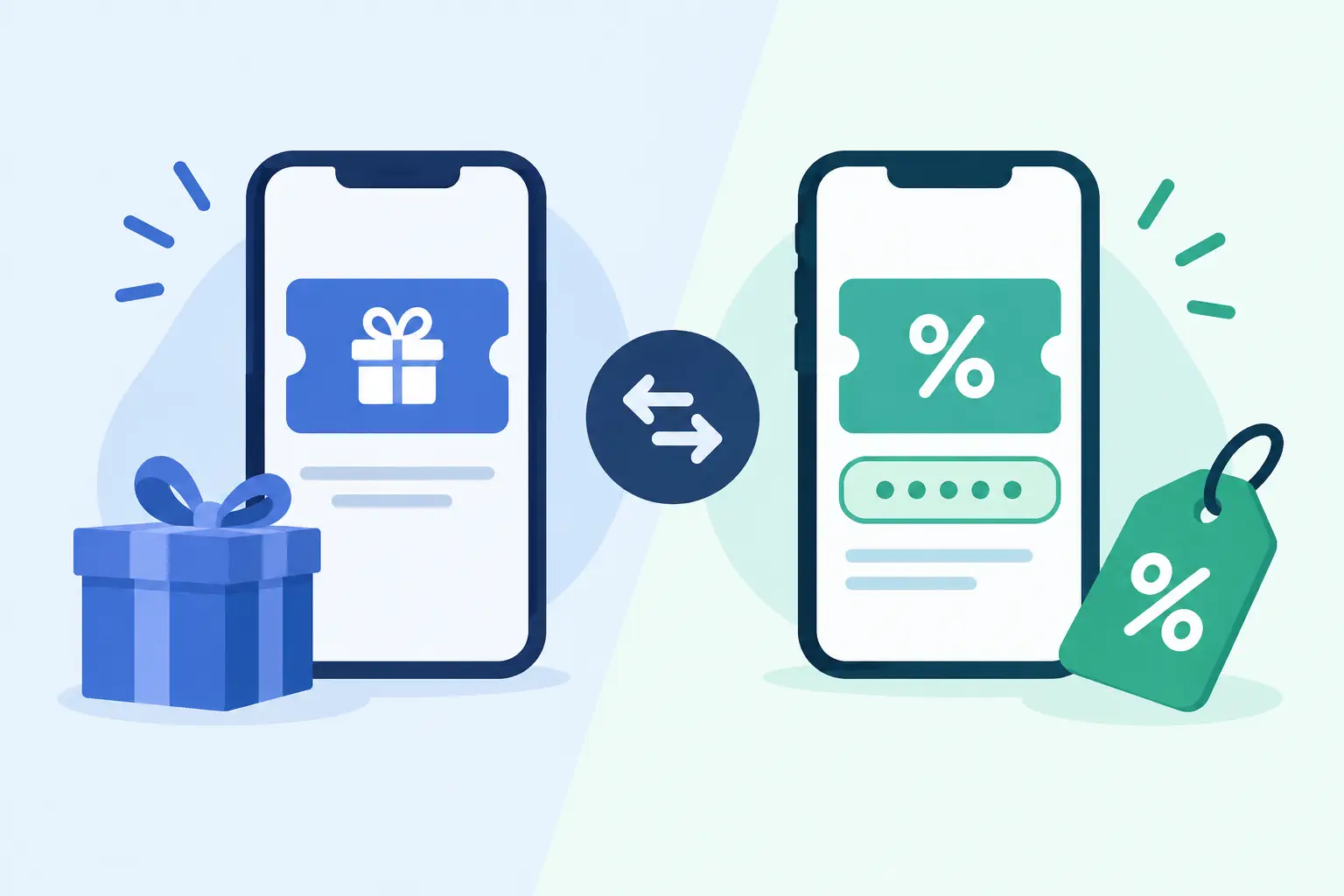
The fastest way to remember the distinction is simple: a voucher is often the offer itself, ready to display or scan. A promo code is usually the key you enter to activate an offer. There are exceptions, since merchants can design promotions in different ways, but that distinction is useful for most everyday purchases.
How Digital Vouchers Work for Local Savings
Digital vouchers are a natural fit when the purchase happens in person. Instead of clipping paper coupons or searching through old emails at the register, you can open an offer on your phone and show the details to the cashier or service provider.
That makes vouchers especially useful for routine local spending. Think car care, restaurants, beauty services, fitness, retail, home services, and entertainment. If you are already near a participating business, a location-relevant voucher can turn a regular errand into an instant saving.
Many vouchers include clear redemption instructions. You may need to tap to reveal the offer, present a barcode or QR code, or let the merchant enter a reference number. Some can be used once; others may be available again after a set period. Always check the basics before you head out: the expiration date, eligible location, minimum purchase, exclusions, and whether the offer is valid for new or returning customers.
The biggest advantage is convenience. A well-designed voucher keeps the deal, rules, and redemption method in one place. No paper, no hassle, just tap and save.
When a voucher is the better choice
Choose a digital voucher when you want a deal that is easy to find and redeem from your phone, especially at a nearby business. It is also a smart choice when an offer is tied to a particular service, such as a discounted haircut, tire rotation, or dinner special. You can see the value before you commit and keep the offer ready for the moment you need it.
Vouchers can also feel more reliable than a code shared on social media or passed around in a group chat. Because the voucher comes with its full terms and a clear redemption path, there is less guesswork at the counter.
How Promo Codes Work at Checkout
Promo codes shine when you are purchasing online. The retailer tells you the code, you enter it during checkout, and the price should update before you pay. This is familiar for online shopping, food delivery, travel bookings, subscriptions, and app-based orders.
A code may be public, such as a seasonal sale code advertised to everyone. It may also be personalized, sent to a customer after they join a loyalty program, abandon a cart, or make a prior purchase. Personalized codes can be valuable, but they often come with tighter limits, such as one use per account or a minimum order amount.
The appeal is control at checkout. You can test the code before completing an order and immediately see whether it reduces the total. If it does not work, do not assume the retailer is at fault. The code may be expired, restricted to selected items, limited to a specific store, or unavailable with other promotions.
When a promo code is the better choice
Use a promo code when you are already buying online and have a clear field to enter it. Codes are particularly helpful for broad discounts across a catalog, free shipping thresholds, first-order offers, or limited-time campaigns where you do not need to visit a physical location.
The trade-off is that a promo code can create friction. You have to locate it, copy it accurately, enter it in the right place, and confirm that it applied. A single typo or an overlooked condition can leave you paying full price. For a quick, in-person purchase, a ready-to-show voucher is often less work.
What Shoppers Should Check Before Redeeming
Whether you use a voucher or a code, the best deal is the one you can actually use. Read the offer details before you add items to your cart or drive across town. Look for the expiration date first, then the minimum spend, participating location, product restrictions, and stacking rules.
Pay attention to the final price, not just the headline discount. A 20% promo code might sound better than a $10 voucher, but it depends on your purchase total. On a $40 purchase, the $10 voucher wins. On a $100 purchase, the 20% code saves more, assuming both offers apply to what you are buying.
Also consider timing. A voucher for a service you already need this week has real value. A promo code for something you would not otherwise buy may not be a saving at all. Smart deal hunting is not about collecting every offer. It is about making your planned spending go further.
What Merchants Need to Know
For local businesses, vouchers and promo codes solve different marketing problems. A digital voucher is built to bring people through the door. It gives a shopper a clear reason to try a nearby business now, which can increase foot traffic during slow periods or promote a high-value service.
Promo codes are better suited to tracking online campaigns, email promotions, social posts, and mobile ordering. A merchant can create separate codes for different channels and see which message brings in sales. For example, a restaurant may use one code for first-time app orders and a separate digital voucher to encourage dine-in visits on weekdays.
The strongest campaigns often use both. A service business could offer a mobile voucher for an in-store consultation, then send a promo code for a follow-up purchase. A retailer could share a local voucher to get shoppers into the store while running an online code for customers who prefer delivery.
The offer needs to be simple enough to understand at a glance. State the savings, the deadline, the redemption steps, and any conditions plainly. A confusing deal does not create urgency. It creates abandoned carts and frustrated customers.
Mobile Coupon is built around that practical idea: help deal-seeking shoppers find nearby offers quickly, while giving merchants a direct way to put timely promotions in front of people ready to spend.
Choose the Offer That Matches the Moment
Digital vouchers versus promo codes is not a contest with one permanent winner. If you are standing near a local business and want quick savings from your phone, a voucher is usually the better fit. If you are checking out online and can enter a code in seconds, a promo code may be exactly what you need.
Before you pay, take one extra moment to check for a local voucher or an active code that matches your purchase. That small habit can make everyday errands, services, and online orders cost less without adding more to your day.
Deals you can use today
Real coupons from local stores. Free to claim.