Digital Coupons vs Paper Coupons That Save More
In this article
A last-minute oil change, a grocery run after work, or a family dinner out can all cost less when the right offer is already in your pocket. In the debate over digital coupons vs paper coupons, the best choice usually comes down to one question: how quickly can you find, use, and benefit from the deal?
For shoppers who want savings without carrying an envelope of clipped offers, digital coupons have changed the routine. You can browse local promotions, show your phone, and get back to your day. Still, paper coupons have not disappeared completely. Each option has strengths, limits, and a place depending on how you shop.
Digital Coupons vs Paper Coupons: The Real Difference
Paper coupons are physical offers printed in newspapers, mailers, receipts, product packaging, or store flyers. You clip them, keep them somewhere safe, and hand them over at checkout. They can be satisfying for planned shopping trips, especially when you have time to organize a stack of offers before you leave home.
Digital coupons are stored or accessed electronically. They may live in a retailer app, a coupon platform, an email, a text message, or a digital wallet. Some are applied automatically after you activate them, while others are redeemed when a cashier scans a barcode or you show the offer on your phone.
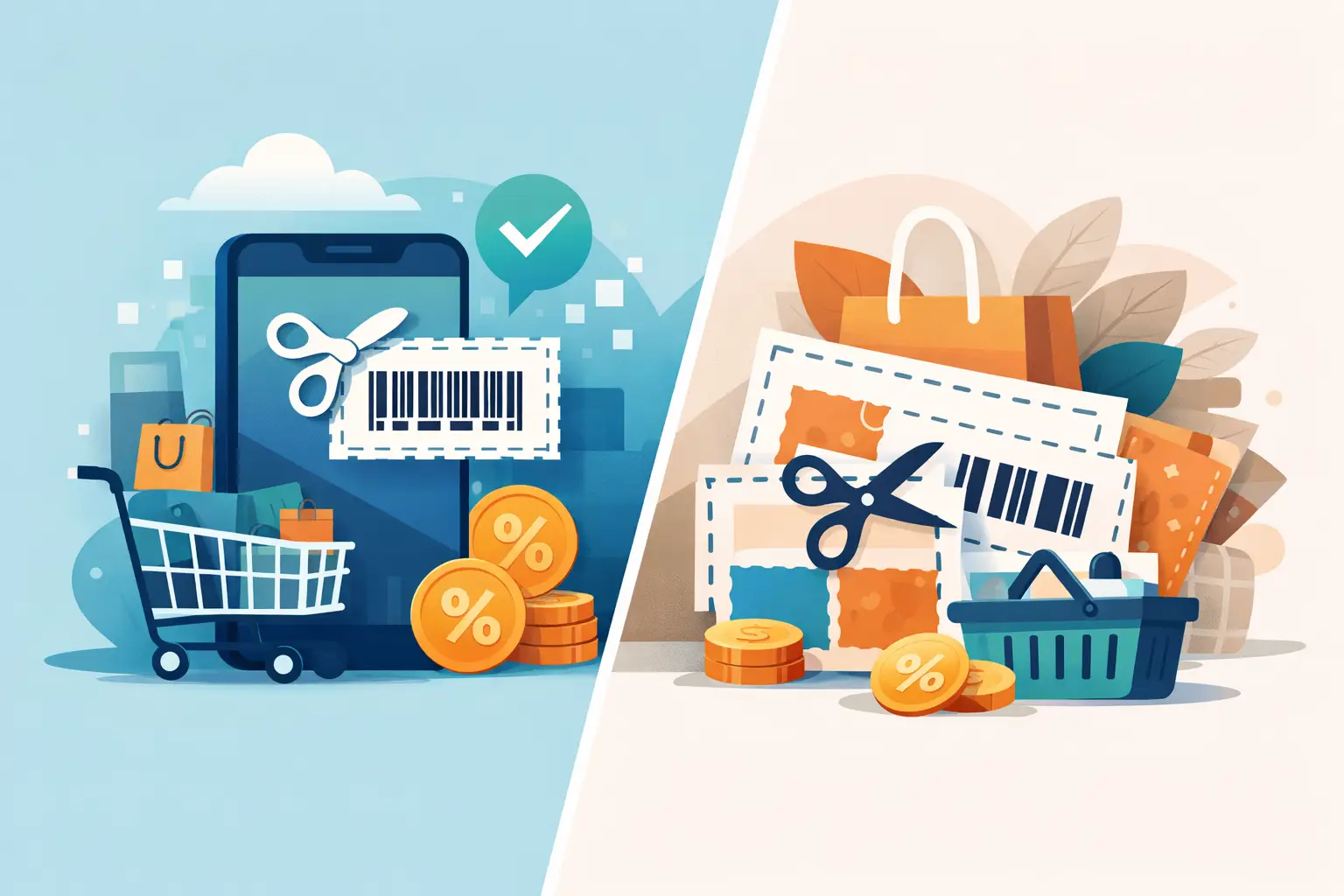
The discount itself may be similar. The experience is not. Paper asks you to plan, carry, and remember. Digital puts the offer where most people already look first: their phone.
Why Digital Coupons Win for Everyday Convenience
The biggest advantage of digital coupons is speed. If you are standing near a local salon, auto shop, restaurant, or retail store, you can search for an offer in seconds instead of hoping you brought the right flyer. That matters when savings opportunities happen between errands, during a commute, or when plans change.
Digital offers also reduce the classic coupon problem: finding a great deal after it has expired or realizing the coupon is sitting on the kitchen counter. A mobile dashboard can show active deals, expiration dates, categories, and nearby merchants in one place. No paper, no hassle, just tap and save.
For many shoppers, digital coupons are easier to organize because they can be sorted by the things they actually buy. Looking for a discount on beauty services, electronics, groceries, travel, or an oil change? Search the category, check the offer details, and choose what fits your day.
Digital coupons can also deliver more relevant promotions. Location-aware platforms can surface deals near where you live, work, or shop. That does not mean every offer will be perfect for you, but it gives local businesses a better way to reach people who are already nearby and ready to spend.
A better fit for time-sensitive deals
Digital coupons are especially useful when an offer has a short window. A merchant can promote a weekday special, a limited inventory clearance, or a seasonal service discount without waiting for a printed flyer to be delivered. Shoppers get a reason to act now, and businesses get a better chance to fill appointments, move products, or increase foot traffic.
That immediacy is hard for paper to match. A printed coupon may still be valid, but it cannot update itself when a merchant changes hours, sells out of an item, or launches a new promotion.
Where Paper Coupons Still Make Sense
Paper coupons are not automatically outdated. For shoppers who prefer to see every offer spread out in front of them, physical coupons can make planning feel more deliberate. Some people enjoy clipping coupons and matching them to a weekly list, particularly for grocery shopping.
Paper can also work well for customers who do not use smartphones regularly or do not want to share an email address to access an offer. A printed coupon is straightforward: bring it in, present it, and receive the stated discount if you meet the terms.
There is also a psychological benefit for disciplined planners. A physical stack can make it easier to focus on a set budget and avoid scrolling into purchases you did not intend to make. If you shop one store at a time, use a detailed list, and plan your trip days ahead, paper may still fit your system.
The trade-off is flexibility. Paper coupons are easy to lose, tear, forget, or leave in the car. They take up space, create clutter, and can be frustrating when the fine print is hard to read. They are also less useful when you need a deal right now.
Savings Depend on How You Use the Offer
Neither format guarantees the biggest discount every time. A smart shopper looks beyond the headline amount. Check the expiration date, eligible products or services, minimum purchase requirement, location, and whether the offer can be combined with another promotion.
A paper coupon for $10 off might beat a digital offer for 10% off on a large purchase. On the other hand, a digital coupon may be more valuable because it is available immediately at a local merchant you were already planning to visit. The best deal is not always the biggest number. It is the one that reduces the cost of a purchase you actually need.
Avoid using a coupon as an excuse to spend more than planned. A discount on an unnecessary item is still an unnecessary expense. Before redeeming, ask whether the offer helps with a routine purchase, solves a current need, or gives you a chance to try a local business at a lower cost.
Watch for redemption rules
Digital coupons can have app requirements, one-time-use limits, or location restrictions. Paper coupons can have exclusions, manufacturer limits, and checkout rules. Read the details before you arrive, especially for services such as automotive work, beauty treatments, travel, or restaurant specials.
If a deal is unclear, a good merchant should be able to explain what is included before you pay. Clear terms protect the shopper and help the business deliver a better experience.
What Local Merchants Gain From Digital Offers
For a local business, paper coupons can still bring attention through mailers or community publications. But they are harder to update, harder to measure, and expensive to reprint when an offer changes.
Digital promotions give merchants more control. They can feature a limited-time deal, reach nearby deal-seekers, and adjust an offer based on demand. A restaurant can promote a slower afternoon. A service provider can encourage bookings during an open time slot. A retailer can bring in shoppers with a promotion tied to a new product or seasonal event.
Digital platforms also make it easier to connect offers with action. Instead of hoping someone saves a flyer for later, a merchant can appear when a shopper is actively browsing local discounts. That is why tools like Mobile Coupon work well for businesses that want visibility without adding friction for customers.
How to Choose the Right Coupon Format
Choose digital coupons when convenience matters most. They are the better fit if you shop from your phone, make frequent local purchases, want access to offers while you are out, or prefer a clean way to keep deals organized.
Choose paper coupons when you enjoy planning ahead, prefer physical reminders, or are shopping with offers that are only available in print. They can also be useful as a backup for shoppers who are not comfortable using apps or mobile checkout.
Many households can use both. Keep a few high-value paper offers for planned purchases, then use digital deals for everyday savings and local discoveries. The goal is not to prove one format is superior in every situation. It is to make saving easy enough that you will actually do it.
Before your next errand, take 30 seconds to check for an active local deal on your phone. That small habit can turn a routine purchase into money left in your budget for what matters next.
Deals you can use today
Real coupons from local stores. Free to claim.