
Why Digital Coupons for Local Stores Work
In this article
- What makes digital coupons for local stores different
- Why shoppers keep choosing mobile coupons
- Why local merchants benefit from digital coupons
- The best digital coupons for local stores feel useful, not random
- What shoppers should look for in a local coupon platform
- How merchants can make digital coupons actually convert
- Where this trend is heading
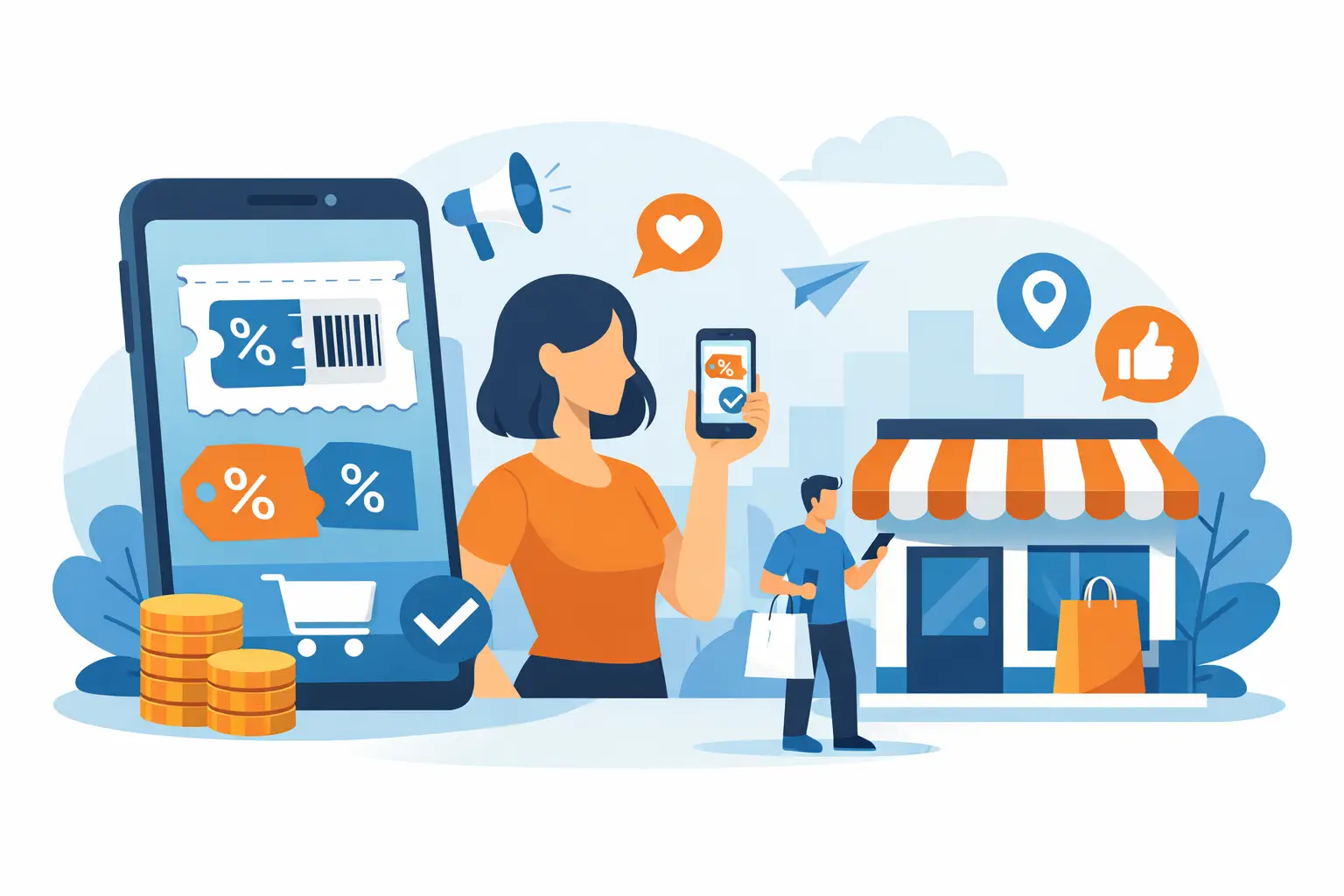
A $10 lunch discount two blocks away beats a pile of expired paper coupons in a kitchen drawer. That is why digital coupons for local stores keep gaining ground with shoppers who want fast savings and businesses that need real foot traffic now, not someday. When the offer lives on a phone, the path from discovery to redemption gets a lot shorter.
For local shoppers, that means less searching, less printing, and less friction. For merchants, it means getting in front of nearby people who are already ready to buy. The value is immediate, and that matters when someone is deciding where to grab coffee, book a haircut, schedule an oil change, or pick up groceries on the way home.
What makes digital coupons for local stores different
Traditional coupons asked people to plan ahead. They had to clip, save, remember, and carry them into the store. Most people did not. Digital coupons flip that model by matching how people already shop - on the go, with their phones, and often close to the moment of purchase.
That changes more than convenience. It changes timing. A local deal seen at the right moment can influence where someone spends money today, not next month. If a shopper is already in your area and sees a deal for a nearby business, the coupon is not just a discount. It is a reason to choose one store over another.
This is where local matters. National promotions can build awareness, but neighborhood-level offers can move people fast. A nearby electronics discount, beauty offer, grocery special, or restaurant deal feels relevant because it is relevant. It fits a real route, a real budget, and a real need.
Why shoppers keep choosing mobile coupons
People are not looking for a complicated savings system. They want quick wins. A digital coupon that can be found in seconds and redeemed from a phone fits the way busy shoppers actually behave.
The biggest advantage is speed. A shopper can check offers while commuting, waiting in line, or comparing nearby options before making a stop. There is no extra prep and no paper to keep track of. That matters for routine spending categories where small discounts add up over time.
There is also a control factor. Shoppers can browse by category, location, or vendor instead of sorting through random mailers or coupon booklets filled with offers they will never use. When deals are organized around everyday spending, saving money feels easier and more practical.
Not every shopper wants the same thing, though. Some want the biggest possible discount. Others care more about convenience, trust, or staying loyal to businesses they already use. The best digital coupon experience supports both. It helps users find something new, but it also makes it easy to save at places they already visit.
Why local merchants benefit from digital coupons
For merchants, digital couponing is not just about offering a lower price. It is about getting attention in a crowded market and turning that attention into store visits, appointments, and purchases. A strong local offer can work like a real-time ad with a built-in reason to act.
That is especially useful for small and mid-sized businesses competing against larger chains with bigger ad budgets. A local store may not outspend a national brand, but it can absolutely outmaneuver one with a timely deal targeted to nearby shoppers.
Digital coupons can also help fill demand gaps. If a salon needs more weekday bookings, a service shop wants to increase afternoon traffic, or a retail store has excess inventory, a mobile offer creates a direct path to action. The offer is visible, easy to claim, and tied to a clear customer benefit.
There is a trade-off, of course. If a business relies on discounts too often, customers may start waiting for the next deal instead of paying full price. That is why the smartest local coupon strategy is selective. The goal is not to train customers to expect permanent markdowns. It is to create urgency, attract new buyers, and encourage repeat visits at the right moments.
The best digital coupons for local stores feel useful, not random
A coupon only works if it matches what people actually want. That sounds obvious, but plenty of promotions fail because they are too broad, poorly timed, or built around a weak offer.
Useful local coupons usually do three things well. First, they are easy to understand. A shopper should know the value in a second. Second, they fit common buying behavior. Discounts on food, auto services, beauty, home essentials, and retail tend to perform well because they connect to regular spending. Third, they are easy to redeem without extra hoops.
This is where mobile-first platforms have an advantage. They make browsing simple, keep offers visible in one place, and reduce the gap between seeing a deal and using it. That is a big reason platforms like Mobile Coupon appeal to both sides of the market - shoppers get instant access to nearby savings, and merchants get exposure to people already looking for a reason to buy.
What shoppers should look for in a local coupon platform
Not all coupon experiences are worth your time. If finding a deal feels harder than the savings are worth, most people will leave. A strong local platform should feel quick from the start.
Look for clear categories, nearby relevance, and offers that can be redeemed straight from your phone. If the platform makes you print, sign up for too many steps, or guess whether the deal is still valid, it adds friction that defeats the point.
Offer quality matters too. A smaller discount at a store you already use can be better than a huge discount for something you do not need. The best platforms balance variety with usefulness, so you can save on both planned purchases and last-minute stops.
There is also a trust element. Shoppers want to feel confident that an offer will work when they get to the counter. Clean presentation, clear terms, and updated local listings go a long way.
How merchants can make digital coupons actually convert
A weak offer gets ignored. A confusing offer gets abandoned. If local merchants want results, the coupon has to be simple, relevant, and tied to a clear next step.
Start with the customer, not the promotion calendar. What would make someone nearby stop in today? Sometimes it is a straight dollar amount off. Sometimes it is a percentage discount, a bundled service, or a limited-time incentive. The format depends on the business, the average ticket size, and how quickly you need action.
The message matters just as much as the discount. Keep it short. Shoppers scanning offers on a phone should understand the value immediately. If they have to decode the fine print, the moment is gone.
Timing also matters. A lunch special should show up before lunch. A weekend retail offer should feel current on Friday, not Monday. Seasonal relevance helps too, but local urgency often wins. A deal that solves a problem today tends to outperform one that sounds nice in theory.
Finally, track what happens after redemption. The first visit is valuable, but the bigger opportunity is repeat business. If a digital coupon brings in a new customer who returns at full price, that promotion did more than fill a quiet afternoon. It helped build revenue beyond the initial discount.
Where this trend is heading
Local commerce is getting more immediate, more mobile, and more intent-driven. People do not want to search through ten websites, compare expired codes, and hope something works. They want nearby savings they can use right now.
That shift favors digital coupons for local stores because they match real shopping behavior. They meet consumers on the device already in their hand and help businesses compete where buying decisions actually happen. The stores that treat mobile offers as part of everyday customer acquisition, not an occasional side tactic, are in a stronger position.
For shoppers, the upside is simple. You save faster on things you already buy. For merchants, the upside is just as direct. You get seen by local customers with intent, not just casual browsers.
The smartest move is not chasing every deal or running every promotion. It is choosing offers that feel timely, useful, and easy to act on. When that happens, digital coupons stop feeling like marketing and start feeling like good timing.
Deals you can use today
Real coupons from local stores. Free to claim.