
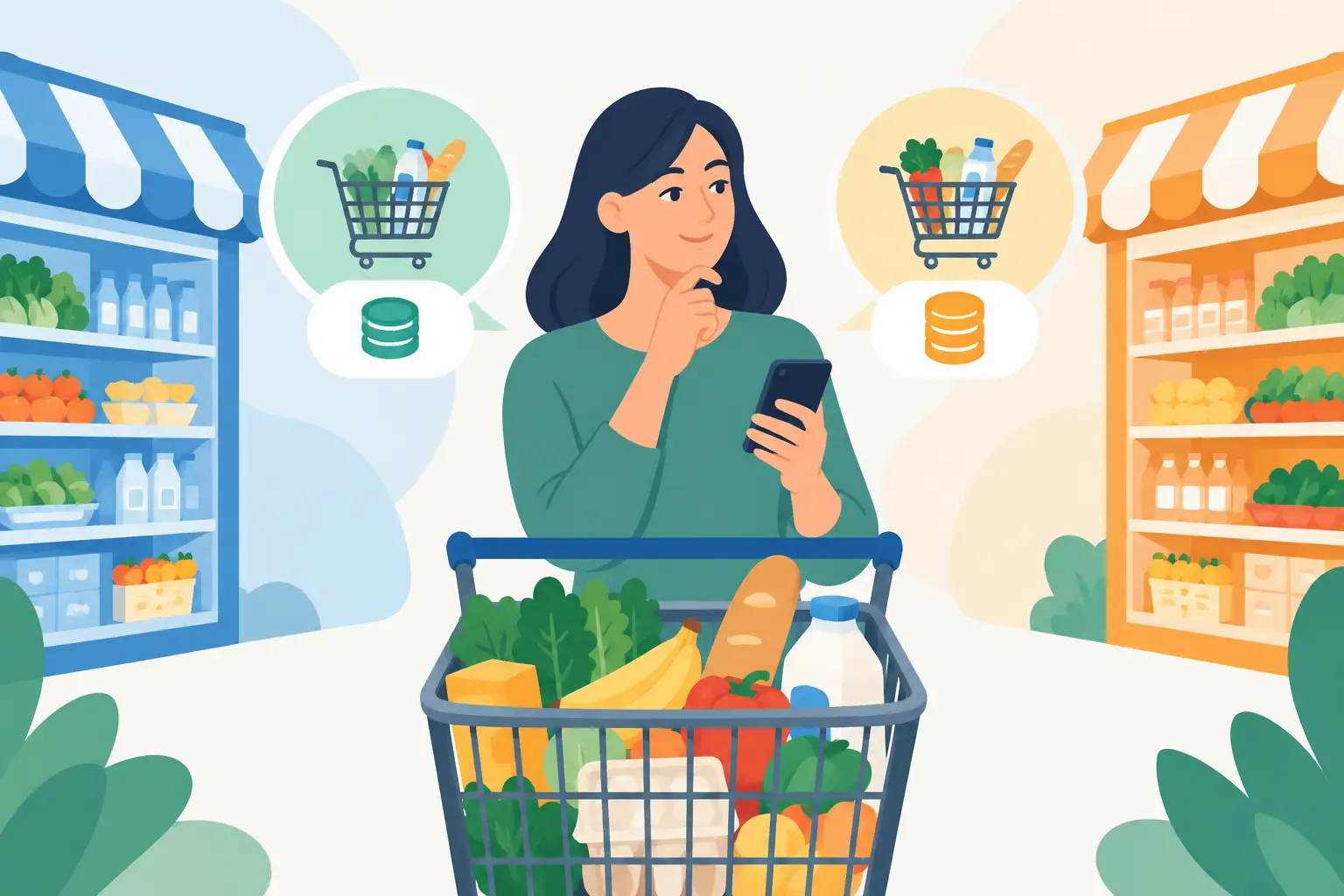
Compare Grocery Prices and Cut Your Cart Total
In this article
A $4 difference on one item feels small. Add that difference across produce, pantry staples, meat, snacks, and household basics, and your weekly grocery bill can jump fast. The smartest way to compare grocery prices is not to chase every sale in town. It is to know what you buy, check the real cost, and use local deals before you head to checkout.
For busy families, commuters, and anyone watching their budget, a phone-first routine makes savings easier. No paper coupons, no guessing at the shelf, and no buying a “deal” you never planned to use.
Start With the Items You Buy Most
Price comparison works best when you focus on your regular cart. A sale on specialty cheese will not help much if your household spends more on eggs, milk, bread, fruit, chicken, coffee, diapers, or cleaning supplies.
Start by looking at two or three recent receipts. Circle the products that appear every week or every month. Those are your price-watch items. Once you know their usual prices, you can spot a real deal quickly instead of getting distracted by big sale signs.
Keep a simple list on your phone with your most common purchases and the price you normally pay. You do not need to track every item forever. Even a short list of 15 essentials gives you a useful baseline when stores run promotions.
Build a flexible shopping list
A strict list prevents impulse spending, but a flexible list gives you room to save. Instead of writing “two pounds of strawberries,” write “fruit for lunches.” If berries are expensive but apples, oranges, or grapes are on sale, you can switch without changing your meal plan.
The same idea works for proteins and pantry staples. Plan for “a dinner protein” rather than one specific cut of meat. If chicken thighs have the better price per pound this week, they may beat chicken breasts. If store-brand pasta is discounted, build a meal around it.
Flexibility is where comparison shopping pays off. You are not giving up what your household needs. You are choosing the best-priced version of it.
Compare Grocery Prices by Unit Cost, Not Package Price
The package price gets the largest print, but the unit price tells you what you are actually paying. A larger box, bottle, or bag is not automatically cheaper. Look for the small shelf label that shows cost per ounce, pound, quart, or count.
For example, a 16-ounce bag of coffee for $9.99 costs less per ounce than a 12-ounce bag for $7.99, even though the smaller bag has the lower sticker price. That matters most for items you buy often, including cereal, laundry detergent, snacks, yogurt, rice, and paper products.
There are exceptions. Buying bigger only saves money when you will use it before it expires or lose interest in it. A bulk deal on fresh produce is not a bargain if half of it ends up in the trash. For smaller households, the better unit price may be worth less than the convenience of a smaller package.
Check size changes before calling it a sale
Brands sometimes reduce package sizes while holding the price steady. This is one reason unit prices matter. A familiar box can look like the same value while containing fewer ounces than last month.
When comparing two stores, make sure you are comparing the same size, variety, and quality level. A premium organic product and a conventional store brand serve different needs. The goal is not always to buy the cheapest item. It is to buy the best value for the product your household will genuinely use.
Check Store Deals Before You Leave Home
The fastest savings happen before you walk into the store. Check weekly ads, store promotions, and local digital offers while you are making your list. You can decide which store makes sense for a larger trip and which items are worth picking up elsewhere.
Do not assume every item needs to come from one store. If one nearby grocery store has a strong produce promotion and another has a better deal on household essentials, splitting your shopping may save money. But factor in your time, fuel, and travel distance. Saving $3 is not worth a 30-minute detour unless you are already nearby.
Mobile Coupon can help shoppers find instant local offers from a phone, making it easier to check for nearby savings without carrying paper coupons. Look for deals that match items and services you already need, then redeem them when the timing works for you.
Stack savings carefully
A sale price can become even better when it combines with a digital coupon, loyalty offer, or store reward. Read the offer details before you shop. Some discounts apply only to certain sizes, flavors, quantities, or spending thresholds.
A “buy five, save five” promotion can be useful if you normally buy those products. It can be expensive if it pushes you to purchase five items just to qualify. The best coupon is one attached to something already on your list.
Also check whether the discount comes off immediately or appears as a reward for a future visit. Future rewards have value, but they are not the same as a lower bill today. If cash flow is tight, prioritize savings you can use at checkout.
Know When Store Brands Win
Store brands are often one of the easiest ways to lower a grocery total without changing how you eat. For basics such as canned beans, flour, sugar, frozen vegetables, pasta, spices, and baking supplies, the store version can cost significantly less than a national brand.
That does not mean every store-brand product is your favorite. Taste and quality matter, especially for products your family notices right away. Try one item at a time rather than replacing your entire cart. If the store-brand version works, add it to your regular list and keep the extra savings week after week.
Brand loyalty makes sense when there is a clear difference you value. But when two products are nearly identical, paying more out of habit is an easy cost to cut.
Avoid the Deals That Raise Your Bill
Grocery stores are designed to make offers feel urgent. End-cap displays, limited-time signs, and multi-buy promotions can be helpful, but they can also add items you did not intend to purchase.
Pause before adding a deal to your cart and ask three quick questions: Would I buy this at regular price? Will we use it before it goes bad? Is this lower than my normal price per unit? If the answer is no, leave it behind.
Be especially careful with processed snacks, prepared foods, and seasonal items. They are often promoted aggressively because they create extra spending, not because they are essential. A discounted item is still an expense.
Make Price Comparison a Weekly Habit
You do not need hours of research to shop smarter. Spend 10 minutes once a week checking your list, comparing the prices of your key items, and viewing nearby offers. That is enough to catch the promotions that matter.
Over time, you will learn your personal “buy price” for frequent purchases. Maybe you stock up on pasta when it falls below a certain amount, or wait for a good promotion before buying detergent. These small decisions add up because groceries are not a one-time expense.
The goal is not a perfect cart every trip. Prices change, schedules get busy, and sometimes convenience is worth paying for. But when you compare with a plan, every tap, offer, and smart swap gives more of your budget room to breathe.
Deals you can use today
Real coupons from local stores. Free to claim.